

Accountability
Accountability
Accountability, transparency, and results drive the Georgia Opioid Crisis Abatement Trust.
from the first dollar awarded to the last life changed.
Grounded
in 5 pillars, the Trust Delivers
This page provides an authoritative view of the Trust’s work—grant recipients, regional allocations, expenditures, and reporting requirements—so elected officials, media, and the public can verify impact, not just promises.
01
IMPACT
Showing where projects are and what they achieve.
02
REACH
Serving every county and community over an 18-year horizon.
03
AWARENESS
Building public trust and credibility with stakeholders, policymakers, and researchers.
04
ACCOUNTABILITY AND TRANSPARENCY
Timely, accessible reporting on data, processes, and policies.
05
LEADERSHIP
Setting a national model for turning settlements into solutions.
2024 & 2025 Funding Awards
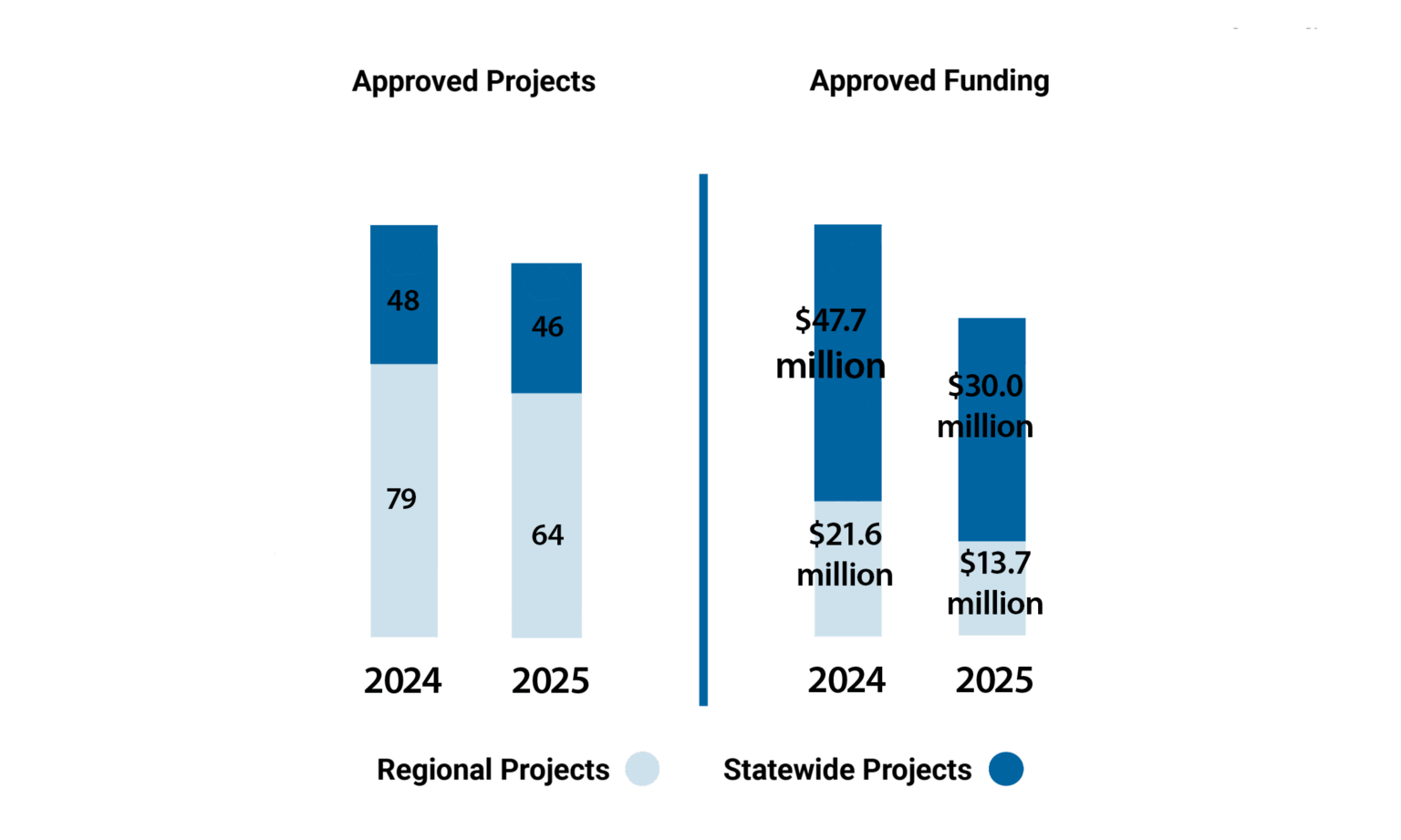
For the 2024 and 2025 grant cycles, the Trusts awarded more than $112 million in settlement funds to launch projects across Georgia
$70 million awarded in 2024
$42 million awarded in 2025
The figures below break down allocations by region, program category, and approved use.
2024 & 2025 Total Projects Funded
Every Life.
Every County.
Every Dollar.
Track where the money is, why it matters, and how it’s reshaping Georgia communities and saving lives.
THESE PROJECTS ARE FROM THE 2024 GRANT FUNDING CYCLE.
Funding Allocations
Of the total funds awarded, 40% is designated for regional projects. The remaining 60% may be spent on statewide projects.
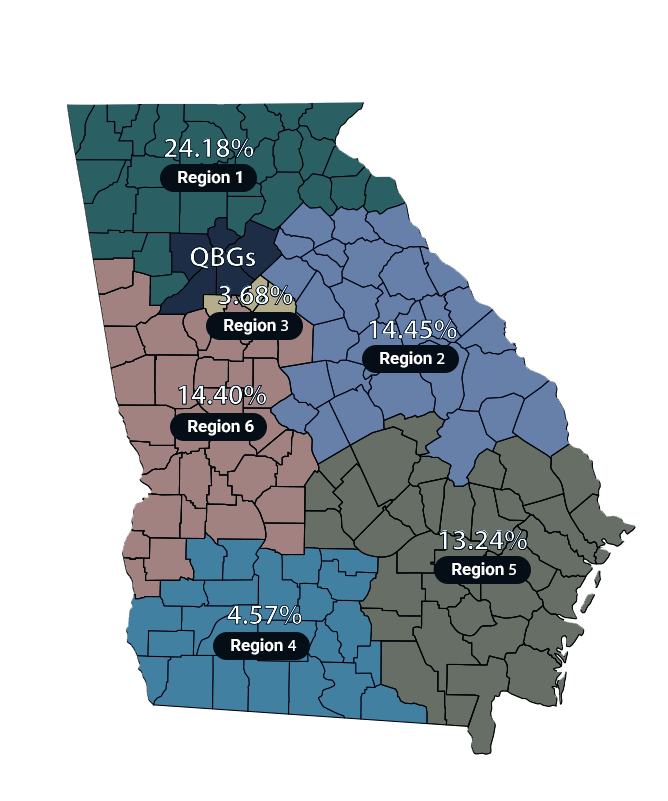
| QBG Regions | Percent |
|---|---|
| Region 7 (Cobb County) | 7.17% |
| Region 8 (Gwinnett County) | 5.98% |
| Region 9 (Dekalb County) | 4.17% |
| Region 10 (Fulton County) | 3.22% |
| Region 11 (City of Atlanta) | 4.95% |
State Funding Allocated: $18,000,000.00
Reporting and Oversight
Accountability is not paperwork—it is lives saved, families stabilized, and communities made stronger, in every county across Georgia. The Trust requires awardees to track performance metrics, which ensures compliance and informs where futures dollars are spent.
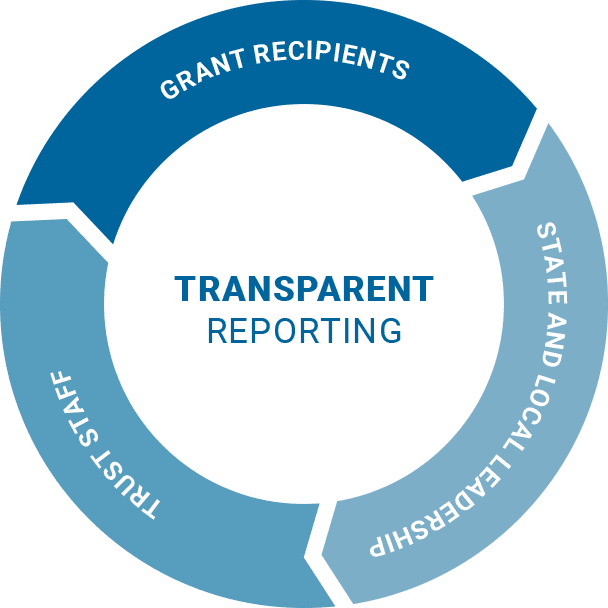
Transparent reporting and strict compliance turn settlement dollars into measurable results that withstand scrutiny.
The Trust’s reporting system documents past performance, strengthens future decisions, verifies appropriate spending, and equips communities to plan requests and anticipate local needs.
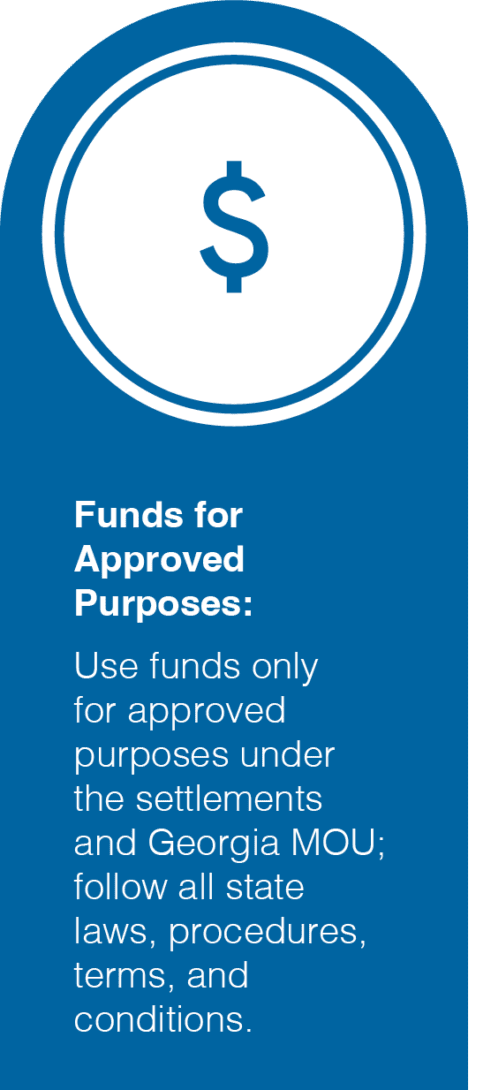
Grant Recipient Requirements
Trustee Responsibilities
1
Publish an annual report detailing: (1) total amounts received; (2) allocations of approved awards—recipient, award amount, program use, and disbursement terms; and (3) amounts actually disbursed.
2
Provide current accounting of payments into and out of the Trust and sub-accounts upon written request by the State or any Participating Local Government.
3
Assess effectiveness annually, evaluating how State, Local Government, and Regional investments reduce addiction, overdose deaths, and related harms.
4
If the State suspects a Participating Local Government used funds for a non-approved purpose, it may request supporting documentation in writing.
Regional Advisory Council Responsibilities
1
Report annually to the Trustee and GOSAC: (1) amounts received by each local government in the region; (2) allocations of approved awards—recipient, award amount, program use, and disbursement terms; and (3) amounts actually disbursed and approved allocations.
2
Collect required information from Participating Local Governments for inclusion in the RAC report.
3
If any ten Participating Local Governments suspect the State used funds for a non-approved purpose, they may jointly request the documentation in writing.
The Trust’s Programmatic Officers safeguard proper use of funds: verifying expenditures, monitoring project progress, investigating concerns, and escalating to the Trustee whenever a request falls outside settlement guidelines. Full process details may be found in the Georgia Opioid Crisis Abatement Trust Resource Toolkit.
This page provides a transparent accounting of non-grant expenditures, including settlement legal fees, and costs for operations, administration, compliance/audit, technology/portal support, communications, and other central costs that enable statewide grant making and oversight.
Georgia Fund 1 (GF1) is the State of Georgia’s primary investment pool, managed by the Office of the State Treasurer, for local government and state agency funds, providing a conservative, liquid and diversified vehicle for operating cash. The Trust uses GF1 to hold operating cash and pay approved attorneys’ fees and expenses, and the Trustee has authorized the Governor’s Office of Planning and Budget (OPB) to access the account to process those payments.
More information on the Trust’s expenditures can be found below.

Access key reports that tell you more about The Trust
2025 State of Georgia Annual Report on Opioid Settlement
Accountability Chart September 2025
GOCAT Sample Contract – Government Entities
GOCAT Sample Contract – Non-Profits and For-Profits
Letter From The Trustee
Trust Expenditures – January 1 2024 – December 31 2024